Clean Air and Clean Water
The proposed EPA budget for 2027 is $4.2B, a 52% cut from the actual 2026 budget of $8.82B. This won’t necessarily go through. The proposed EPA budget for 2026 was originally $4.16B, a 54% cut from the actual 2025 budget of $9.14B. But just because self-inflicted disaster was averted once doesn’t mean it must happen again. This year’s push to stem the tide of chaos and exemplify the virtue of maintenance will involve work, stress, and political concessions. It’s framed so that a hard-fought agreement on a 4% cut will feel like a victory. It’s exhausting and it feels like it never gets better.
I can’t help with the exhausting part. It sucks. But I can tell a story about how it once got better.
Why does the EPA exist in the first place? As the TSA’s example illustrates, government agencies don’t just spring into being for no reason. President Nixon, a Republican, signed an executive order creating the EPA in December 1970. The first Earth Day was also celebrated that year, on April 22, 1970. What happened in 1969?
Well, there’s the obvious event. The Apollo 11 moon landing, and the space race in general, gave people renewed perspective on the isolation and fragility of the Earth. But what else? LA’s smog problem was common knowledge, comparable to Beijing in 2010. NYC’s air pollution was even worse. Its third smog disaster in 15 years took place on Thanksgiving weekend in 1966. (The Pokémon Koffing and Weezing were named “Ny” and “La” in an early beta.) But the event with the most direct line to the EPA’s establishment was the Cuyahoga River catching on fire in June 1969.
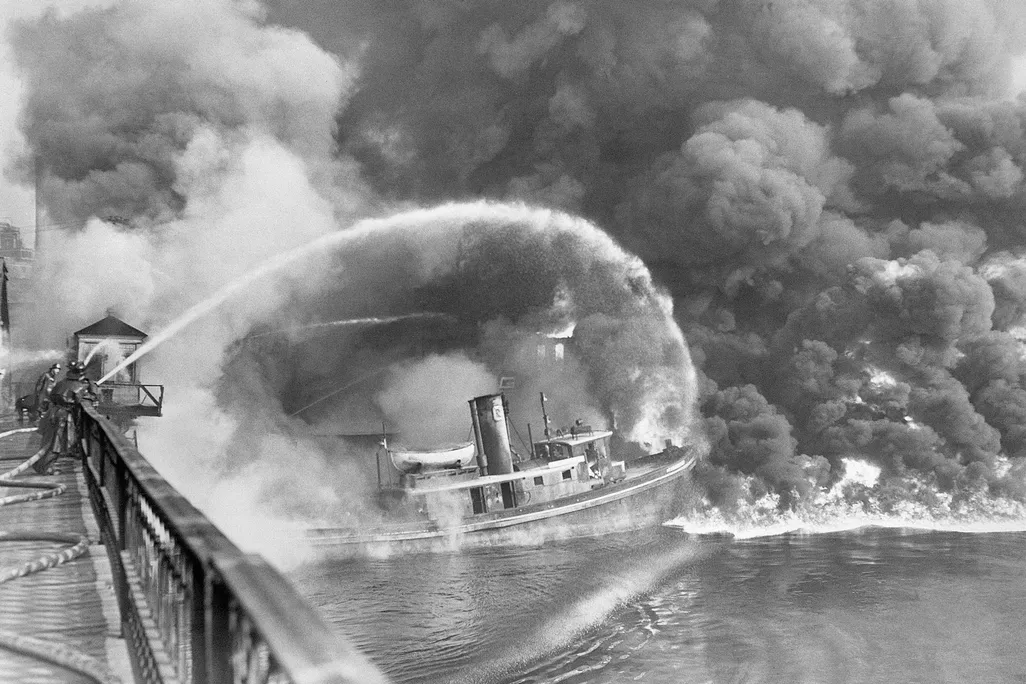 Black-and-white photo of the Cuyahoga River on fire. Most of the frame is filled with smoke. Firefighters on a bridge on the left spray water at the blaze from hoses.
It sounds dramatic when stated that way. But the Cuyahoga River, which runs through Cleveland, had actually caught fire 12 times in the last hundred years. The river was well-known as a polluted hellscape, an open sewer littered with bubbling oil slicks that killed any wildlife unlucky enough to drink from it. If anyone fell in, they got sent to the hospital. That was simply the price we had to pay for industry. No one had any examples of anything better.
But the fire got a writeup in Time Magazine on July 31, 11 days after the moon landing. We actually don’t have any pictures of the 1969 fire; it was a minor one that firefighters were able to put out within 30 minutes. The photo Time ran, reproduced above, was a photo of the more destructive 1952 fire. National Geographic later ran a cover story including it in December 1970.
Americans across the political spectrum became convinced both that there was a serious problem and that we had to do something about it, even though nothing like it had ever been solved before. The Clean Air Act, established 1963, was strengthened in 1970. in Greenpeace was founded in 1971. The Clean Water Act was passed in 1972.
And it eventually worked! The EPA declared Cuyahoga River fish safe to eat in 2019. The Hudson River was toxic as recently as 1990, but today the first leg of the NYC triathlon’s involves swimming in it. As for air quality, here’s two ways you can look at the same data. You could look at the change in US air pollutant emissions from 1922 to 2022 (the most recent year in this data set):
Or you could look at the change in US air pollutant emissions from 1972 to 2022, the period where we committed to reducing them:
It’s easy to focus on climate change, an intractable devastating problem that no one has ever solved before, and despair. It’s not obvious to look back at clean air and water, DDT, CFCs, acid rain, and leaded gasoline, and hope. I elect to do both.
On the event of its 56th ever occurrence, Happy Earth Day.