sterno
The stove-in-a-can sterno has become a genericized brand name long since its 1915 debut. In 1893, Brooklynite Sigmund Sternau founded a company that became known for its portable heating devices. Their signature product, Sterno Canned Heat, was a commercially successful application of an alcohol jellification process developed in 1900. Its catchy name was recycled from an earlier product that had been given the rhyming name .
-o was also a productive casual suffix in the 1910s. Some contemporary constructions include bucko, kiddo, wino, ammo, and memo. The Marx Brothers (Chico, Harpo, Groucho, Gummo, and Zeppo) became famous in the 1910s.
Sterno Canned Heat is essentially a candle made of jellied denatured alcohol instead of wax, packing several hours of fuel into a convenient container. Today, its most common uses are heating for buffet chafing dishes (from French chauffer, meaning “to make warm”; -eur is the French masculine agent suffix, as seen in saboteur or entrepreneur) and a portable stove for outdoors cooking.
Sternau is a German surname that’s likely based on a place name. “Stern” means “star”, and the -au suffix is often found in meadow and river names.
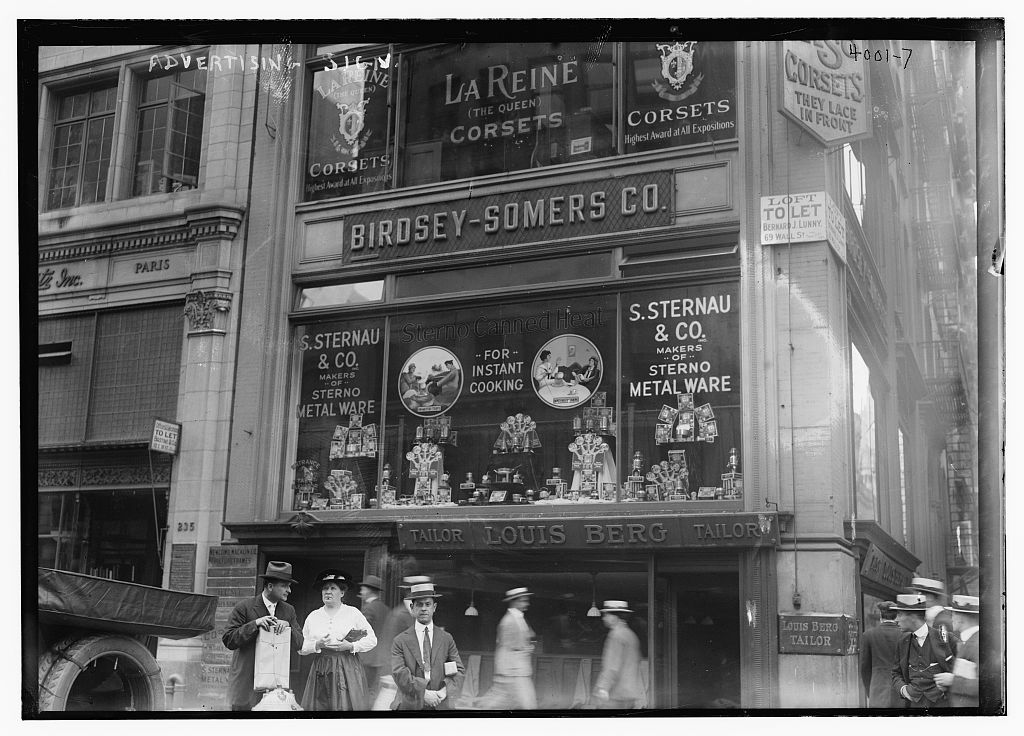 Late 1910s photo of the NYC storefront at 27th St and 5th Ave. The second floor of the busy storefront is labeled Birdsey-Somers Co. and filled with an advertising display for Sterno Canned Heat and metalware, sold by S. Sternau & Co. The first floor is occupied by Louis Berg, Tailor, while La Reine (The Queen) Corsets takes up the third.
The process of adding poison to alcohol in order to make it unsafe for consumption is called denaturing. Denaturing has no other purpose besides discouraging consumption. Drinking alcohol is heavily taxed in most localities, so products that include alcohol but are not intended for drinking, like mouthwash, denature it to lower prices. In 1915, this involved adding the poisonous blinding additive methanol. Today, in addition to methanol, denatured alcohol usually includes an extremely bitter additive like denatonium, and an emetic like ipecac.
During Prohibition in the US (1920-1933), many people did not let poisonousness or blindness stop them from drinking Sterno and other denatured alcohols. Mississippi blues guitarist Tommy Johnson immortalized this desperation in song. His 1928 hit Canned Heat Blues features the refrain “Crying, canned heat, mama, sure, Lord, killing me.”
Thirty years later, LA blues rock band Canned Heat named themselves after Johnson’s song in 1965. They got big enough to play at Woodstock. Thirty years after that, London acid jazz band Jamiroquai named a 1999 hit single after the blues band. Jamiroquai’s Canned Heat notably featured in the 2004 hit comedy movie Napoleon Dynamite.